
Data platform
Lumen: making company data trustworthy, traceable and governed
A governance and observability console for data teams. It brings lineage, quality, access and incidents into one place, so people can answer "can I trust this number?" in seconds.
- Role
- Lead product designer
- Users
- Data engineers, stewards, compliance, analysts
- Platform
- Web console
- Scope
- Research, IA, graph visualisation, workflows, design system
The challenge
When a dashboard number looks wrong, finding out why can take days. Ownership lives in people's heads, quality checks sit in separate tools, and access requests move through email. The console had to make the data estate understandable without hiding how complex it really is.
Who it is for
Governance fails when it is designed for only one audience.
- Data engineers: need fast root cause when a pipeline breaks
- Data stewards: own definitions, quality rules and classifications
- Compliance: need an audit trail they can hand to a reviewer
- Analysts: just want to know what they can use and who to ask
Lineage you can read
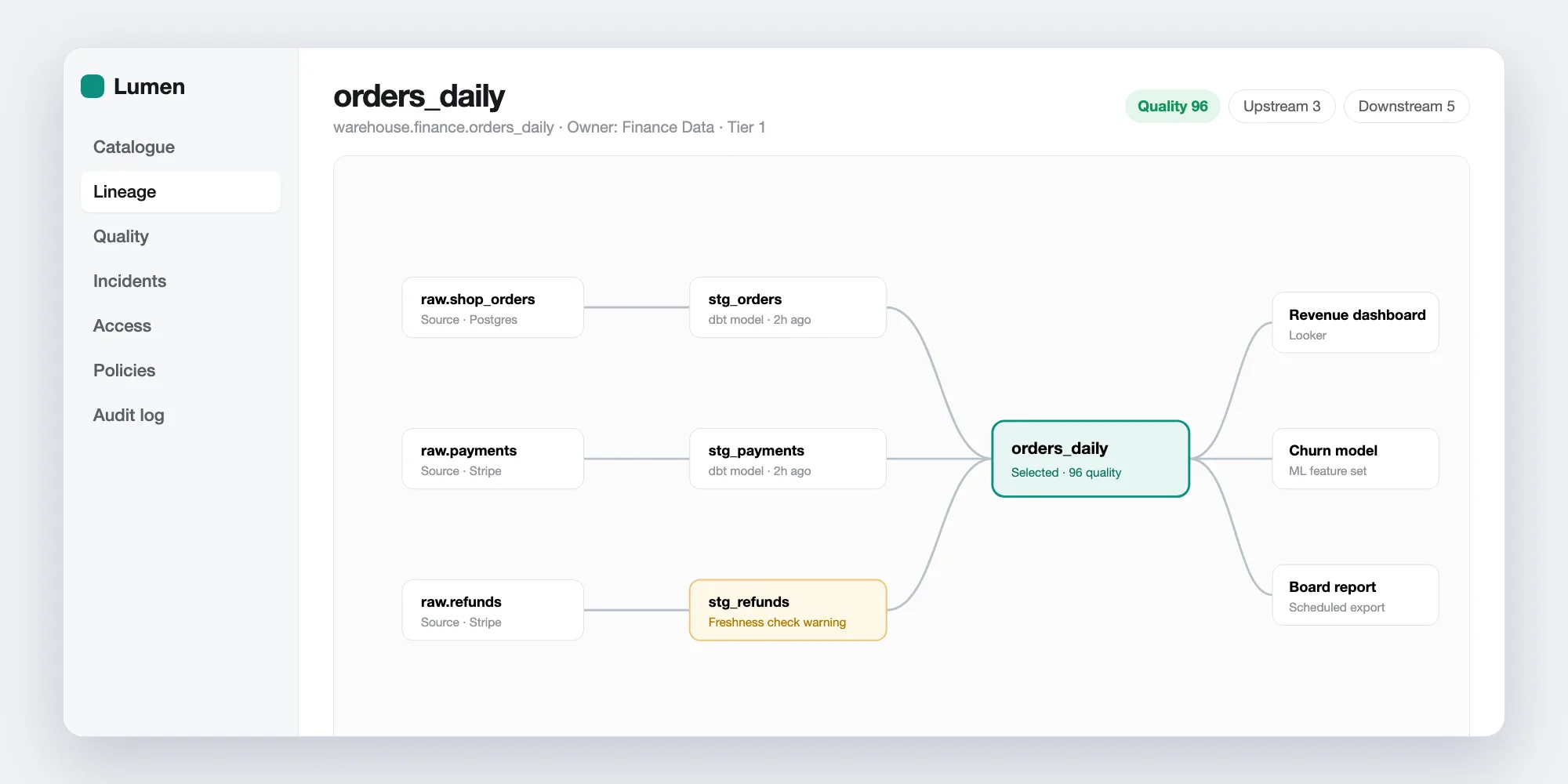
Lineage graphs get unreadable fast. The console starts from one asset and shows only its direct neighbours, then lets people expand upstream or downstream a step at a time. Column-level paths are drawn only when a column is selected. A side panel shows owner, freshness and quality for whatever is in focus.
Quality scores people trust
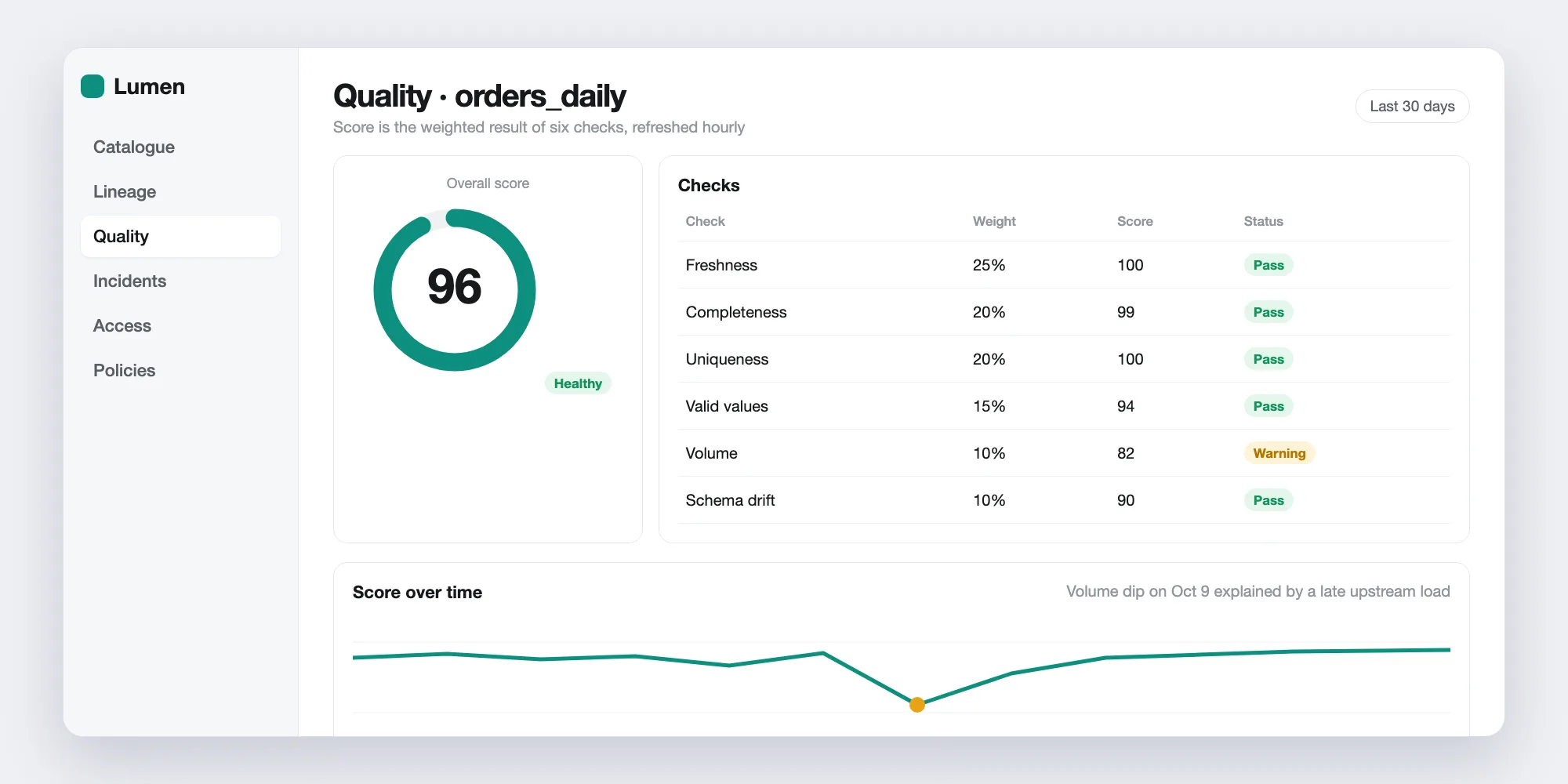
A single score hides too much, so each asset shows a small breakdown: freshness, completeness, validity and volume. Each part links to the rule behind it and its recent history. Failing checks open an incident with the affected downstream assets already listed.
Incidents
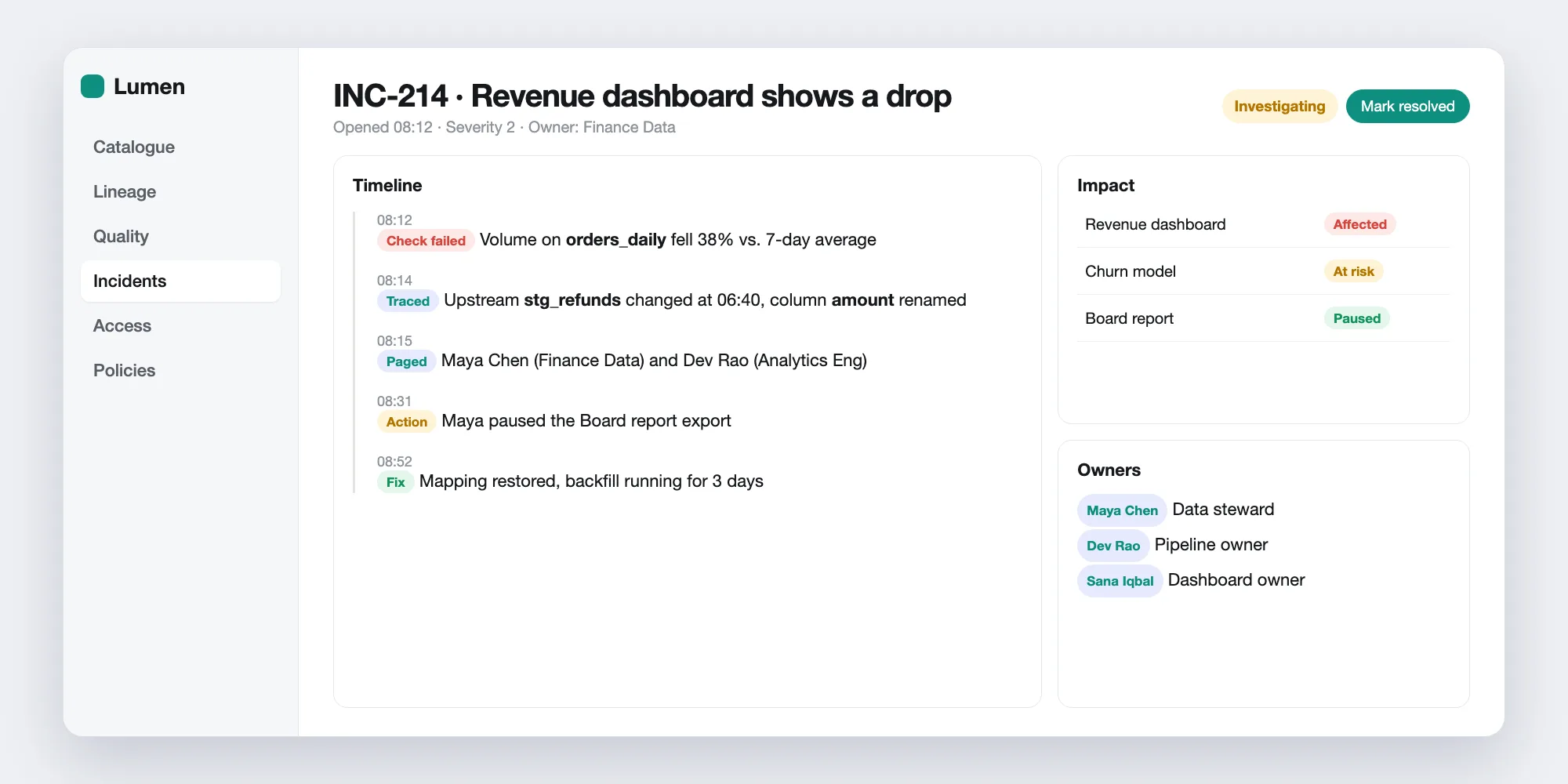
An incident view gathers the failing check, the changed upstream asset, who owns what, and a timeline of actions. Owners are paged, statuses are explicit and every step is recorded, so the postmortem is half written by the time the incident closes.
Access requests and audit
Requesting access is a short form that shows the data classification, the policy that applies and the likely approver. Approvals can be time-limited. Every decision lands in an audit log that can be filtered by asset, person and period, and exported for a review.
Classification and policy
Stewards tag columns such as personal data, financial or internal. Policies attach to tags rather than tables, so a new column inherits the right rules automatically. A coverage view shows what is still untagged, so gaps are visible.
Design system
The console is dense by nature. Tokens cover status colours that stay legible for colour-blind users, a graph component with keyboard navigation, and table patterns for very large lists with saved views.