EdTech platform, 2025
Designing a scalable, AI-enabled education marketplace
An end-to-end platform that connects parents and learners with verified tutors, and gives tutors and internal teams the tools to run sessions, performance and operations at scale.
- Role
- Lead UI/UX designer
- Company
- The Sapience LLC
- Timeline
- March to December 2025
- Scope
- Marketplace, mobile apps, CRM, design system, AI UX
- +35%Engagement across Sapience platforms
- +40%Onboarding activation
- +40%Feature adoption on the CRM dashboard
The challenge
Education services are fragmented. Parents struggle to find and trust tutors, tutors face complex onboarding, and admin teams rely on manual workflows. Existing platforms lacked personalization and couldn't scale.
How might we design one system where parents, tutors and admins each have a different mental model, yet the experience stays consistent and intuitive?
Users and research
Research identified three groups with distinct needs:
- Parents and learners want trust, clarity and ease, with a low tolerance for friction.
- Tutors want visibility and predictable income, and use the app frequently.
- Admins are power users who need high-frequency actions and zero errors.
“AI features fail when users don't understand why something is suggested.”
Design strategy
The strategy rested on two principles: clarity over completeness and trust-first UX. Progressive disclosure handled complexity, and AI always kept a human in the loop.
Marketplace
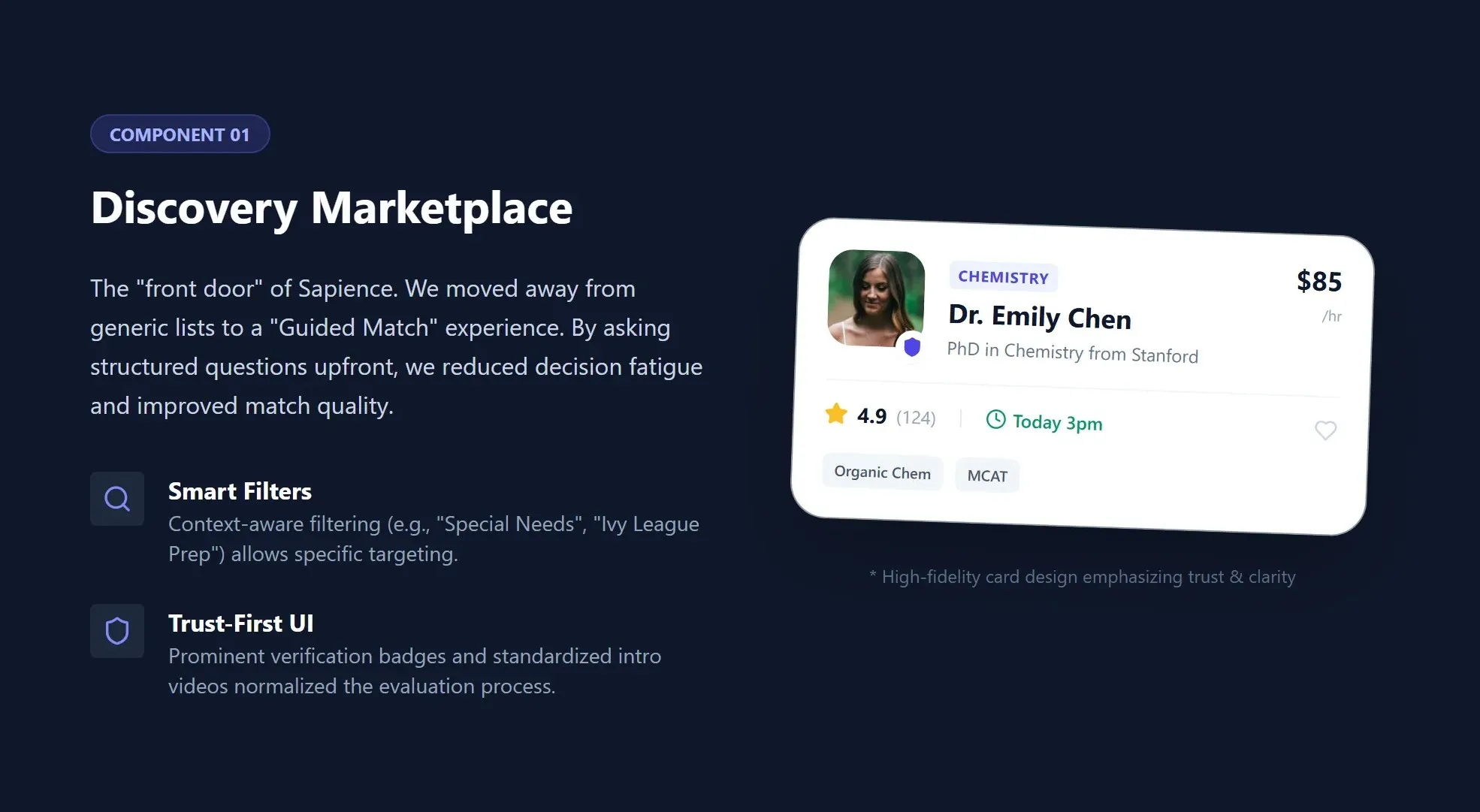
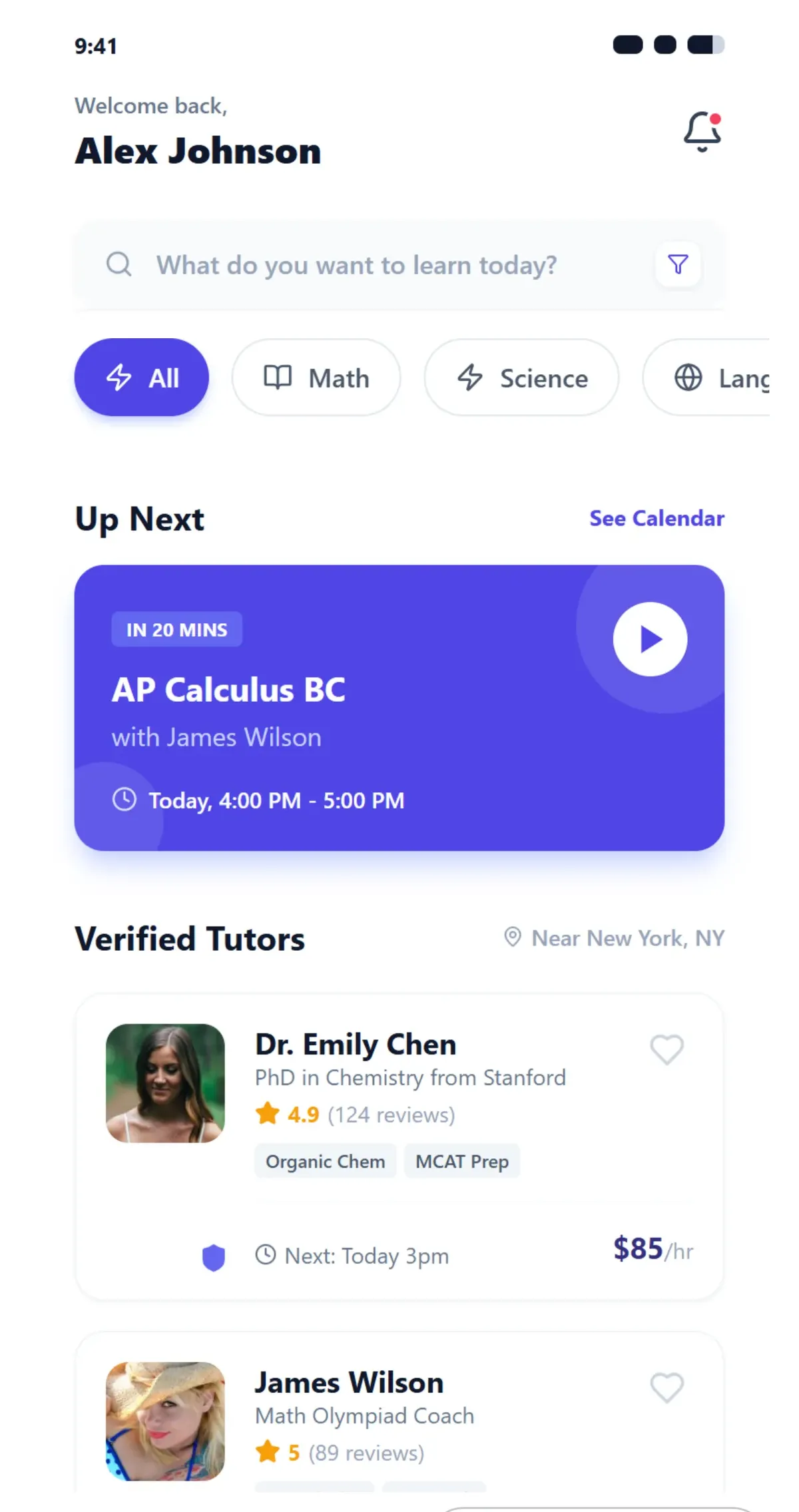
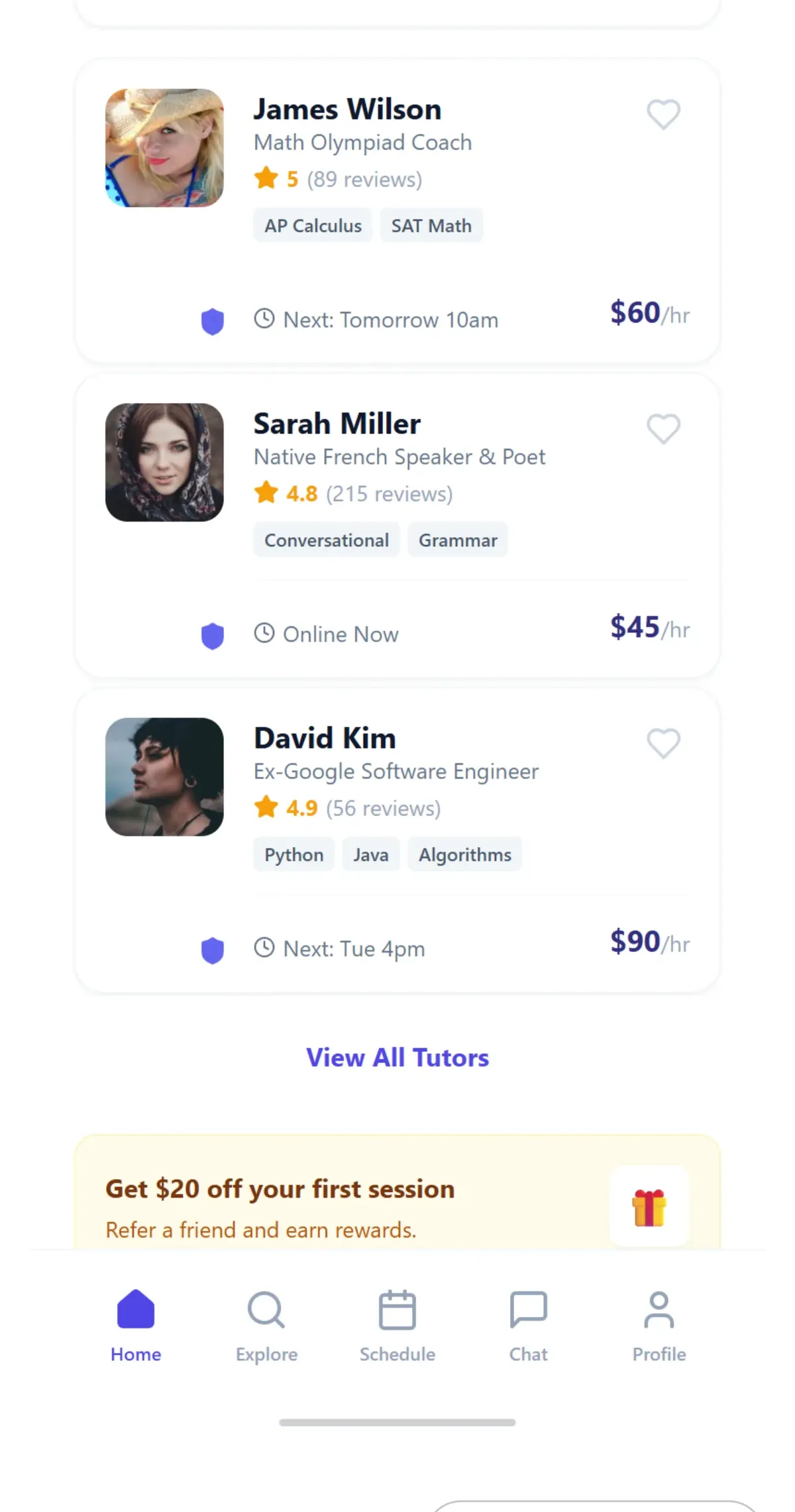
Modular tutor cards with a strong hierarchy put expertise and reviews first. Filters reveal themselves progressively so parents aren't overwhelmed, and a guided-match flow asks structured questions upfront to reduce decision fatigue.
Sapience One app
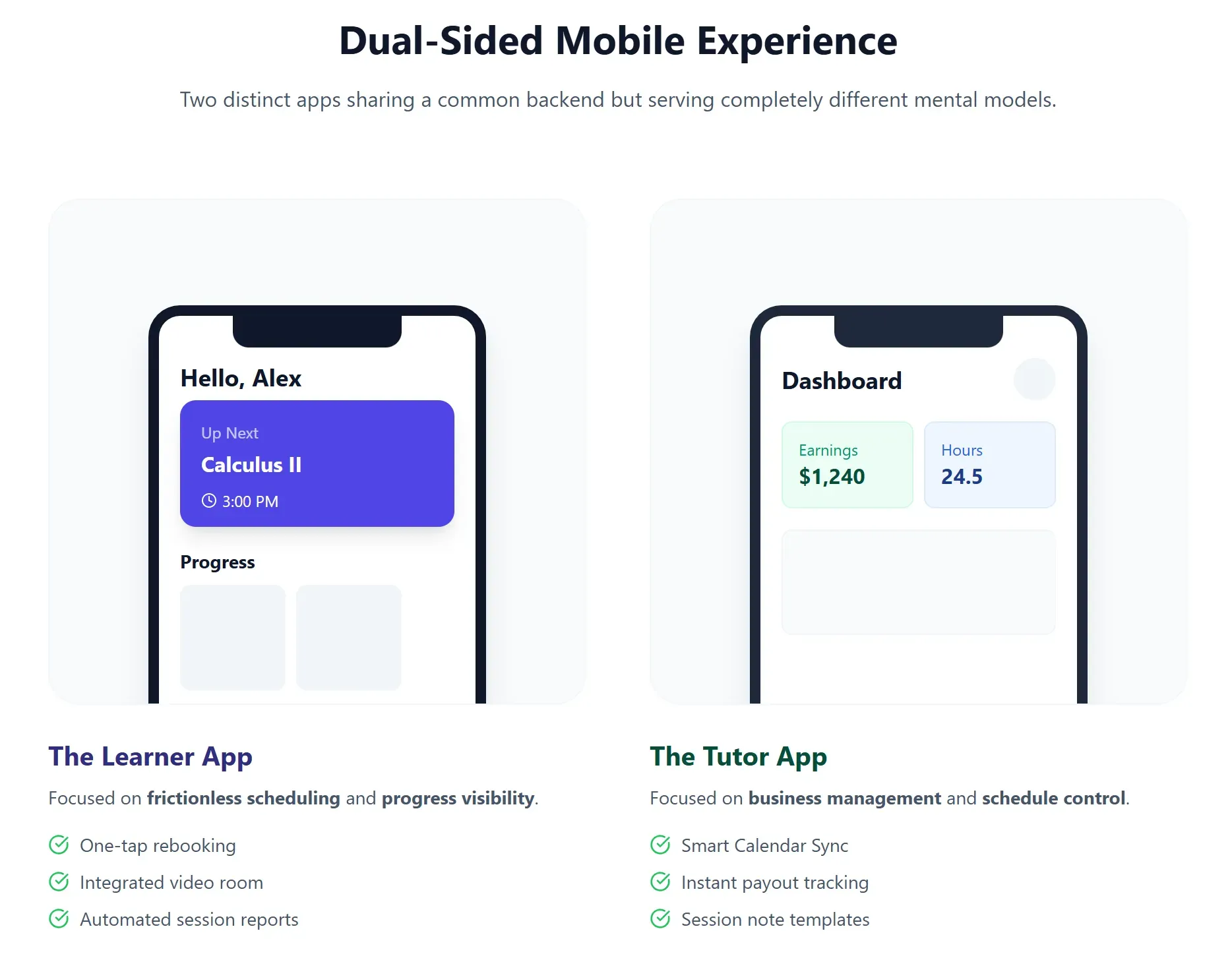
For parents and learners, the goal was minimal cognitive load: calendar-based scheduling people already understand, and clear micro-interactions to confirm critical actions like booking and payment.
Tutor and admin tools
Tutor app: simplified onboarding with clear progress indicators, and a dashboard focused on earnings and upcoming sessions.
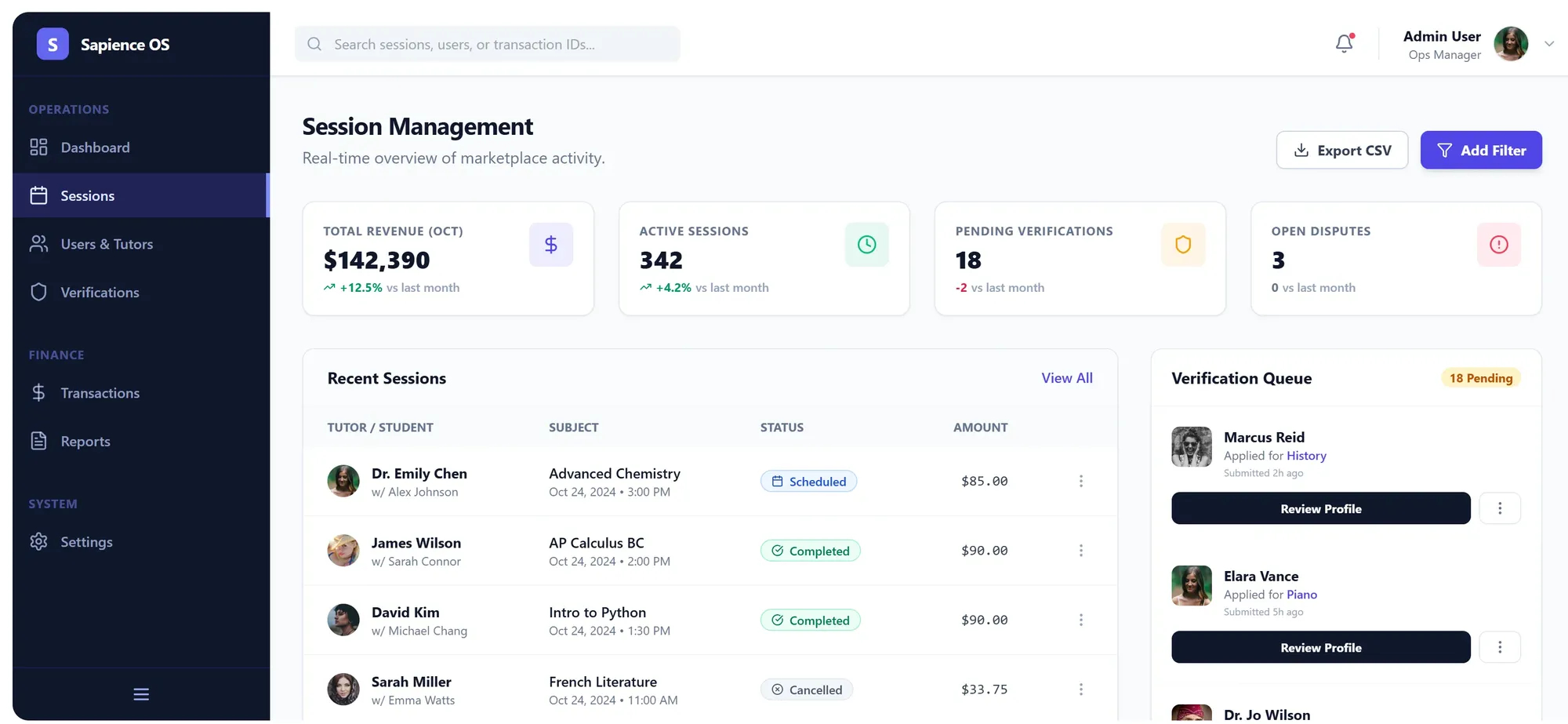
CRM and admin dashboard: role-based dashboards reduced context switching, and data visualization replaced raw tables for monitoring platform health. Predictive analytics surface personalized insights for learning center managers.
AI-driven UX
AI assists decisions; it doesn't make them. Every AI surface was designed around explainability and confidence.
- Personalized suggestions come with a reason, such as "Matches your schedule".
- Admin insights flag potential issues but leave the final call to a person.
Session recaps
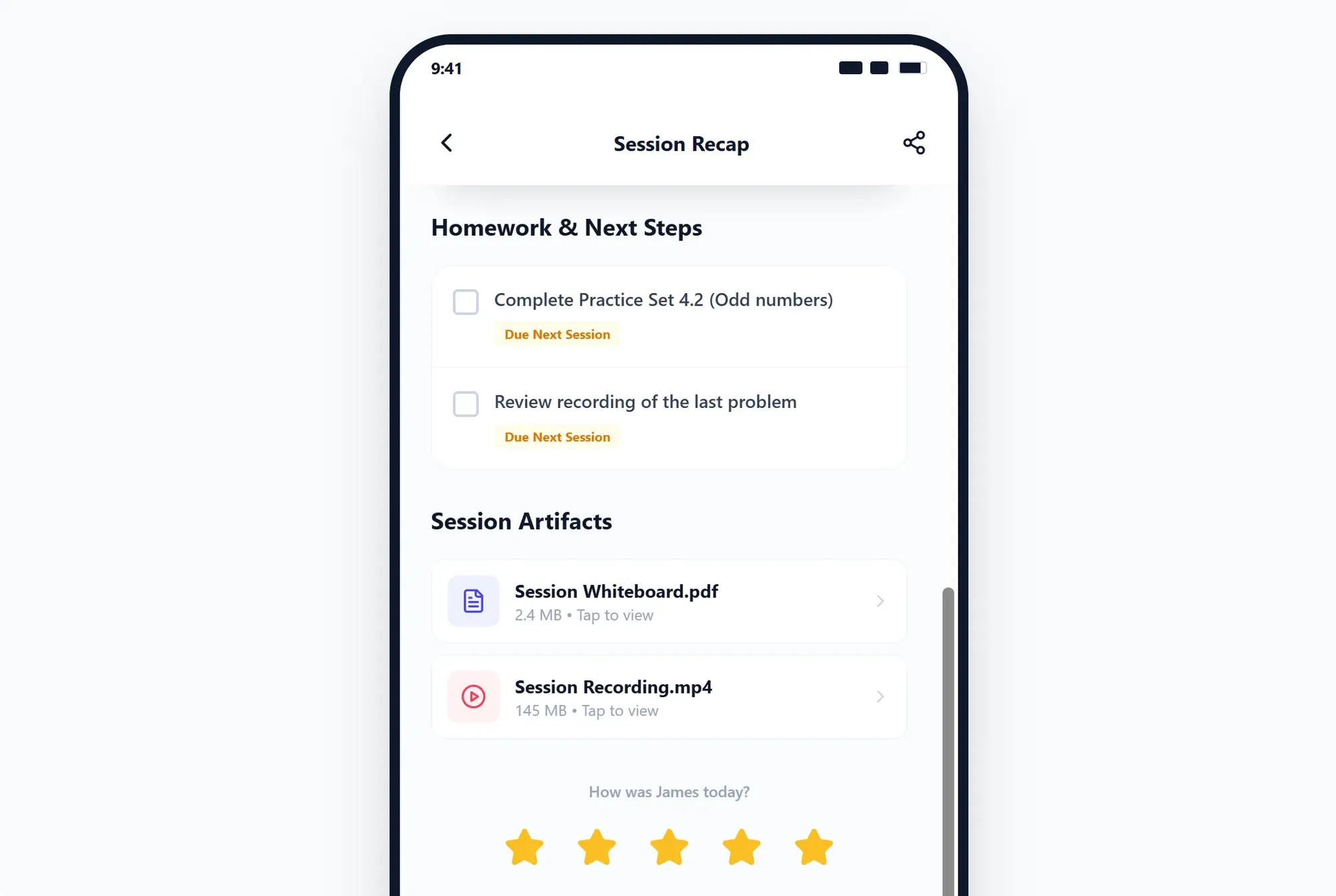
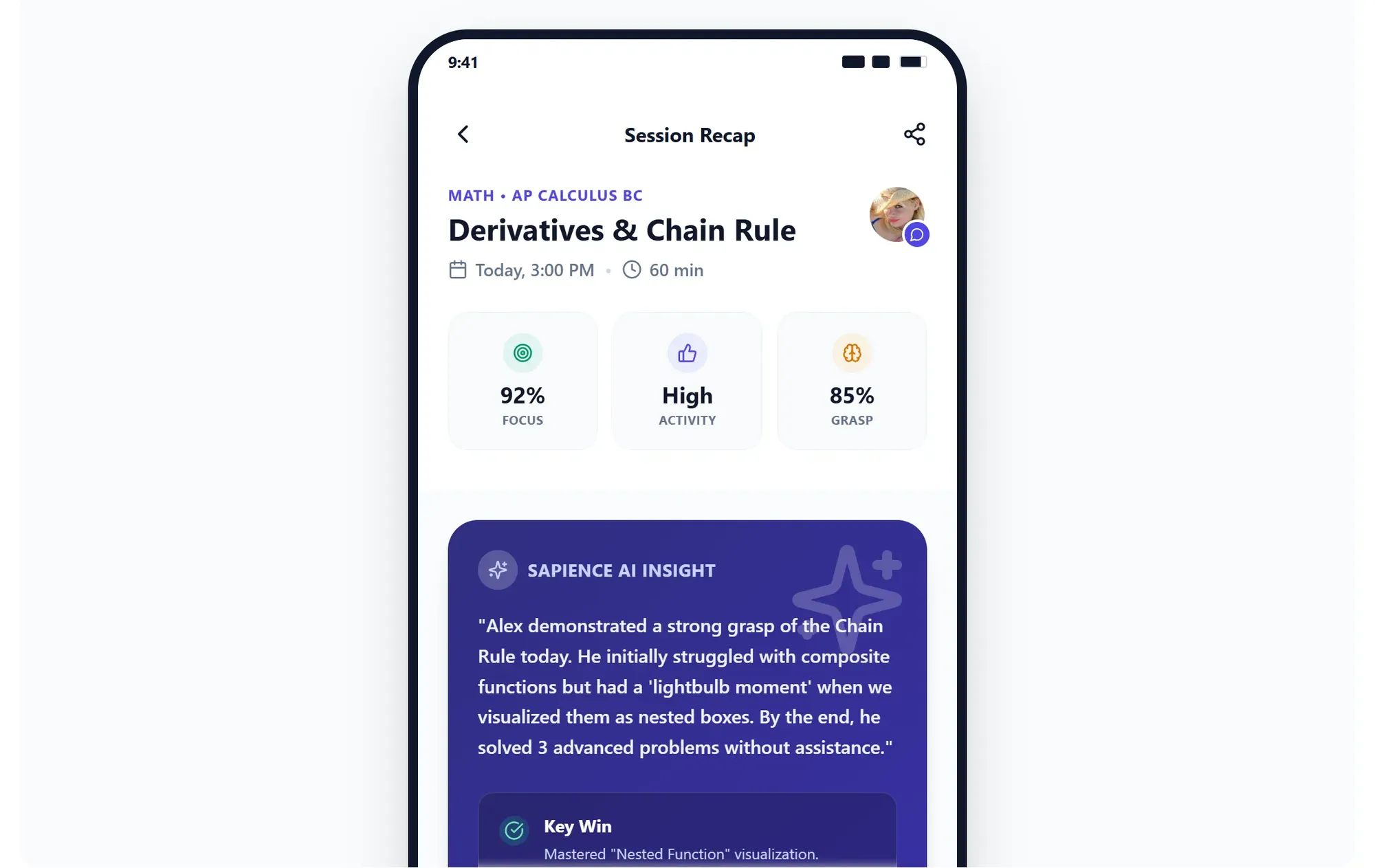
Recaps give parents and tutors key takeaways, progress tracking and next steps after every session, making learning visible and building trust in the platform.
Outcome
Engagement rose about 35% across platforms and onboarding activation improved about 40%. A shared design system meant fewer support tickets and faster development iterations, with 98% design-to-code accuracy.